ABOUT:
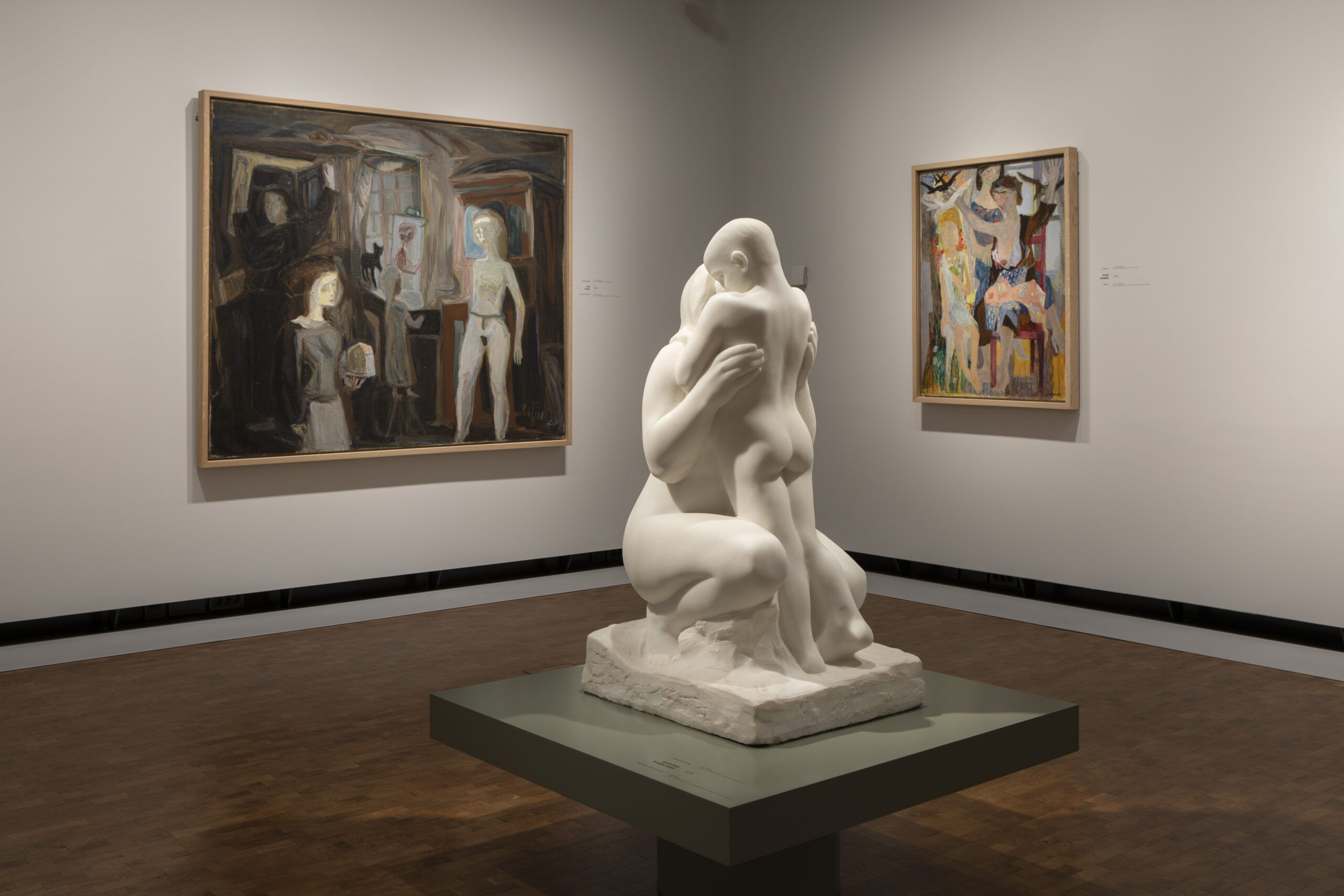
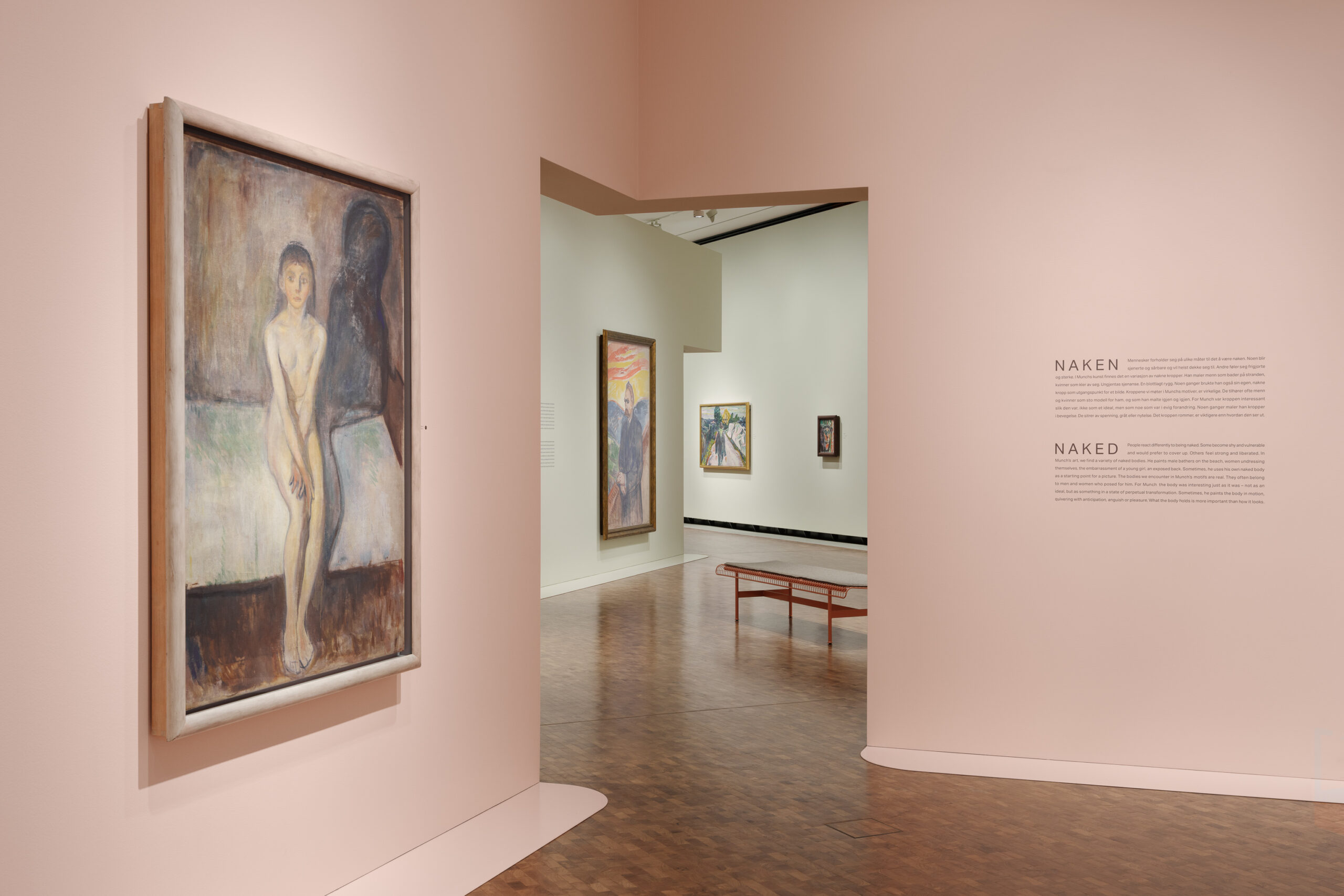
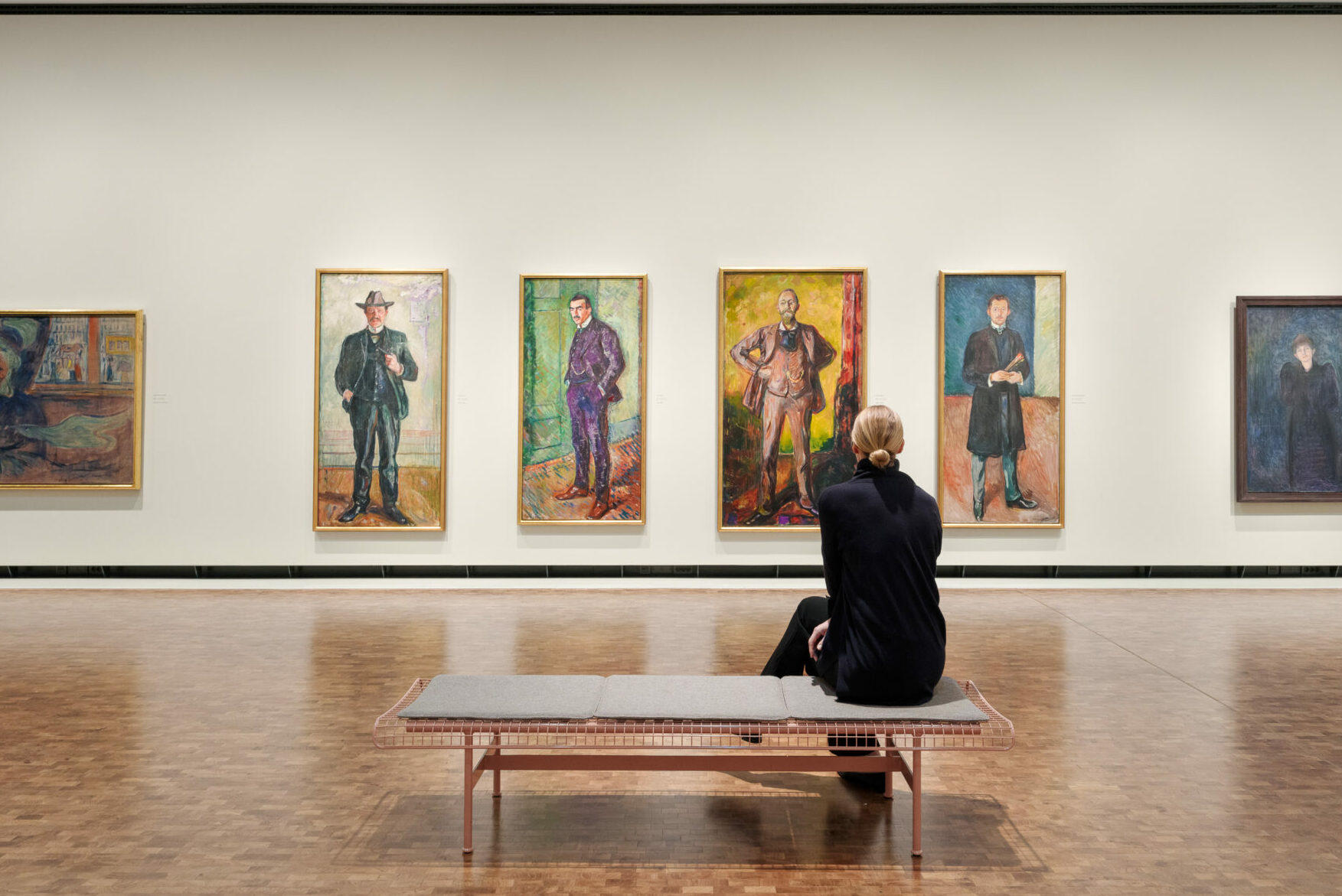
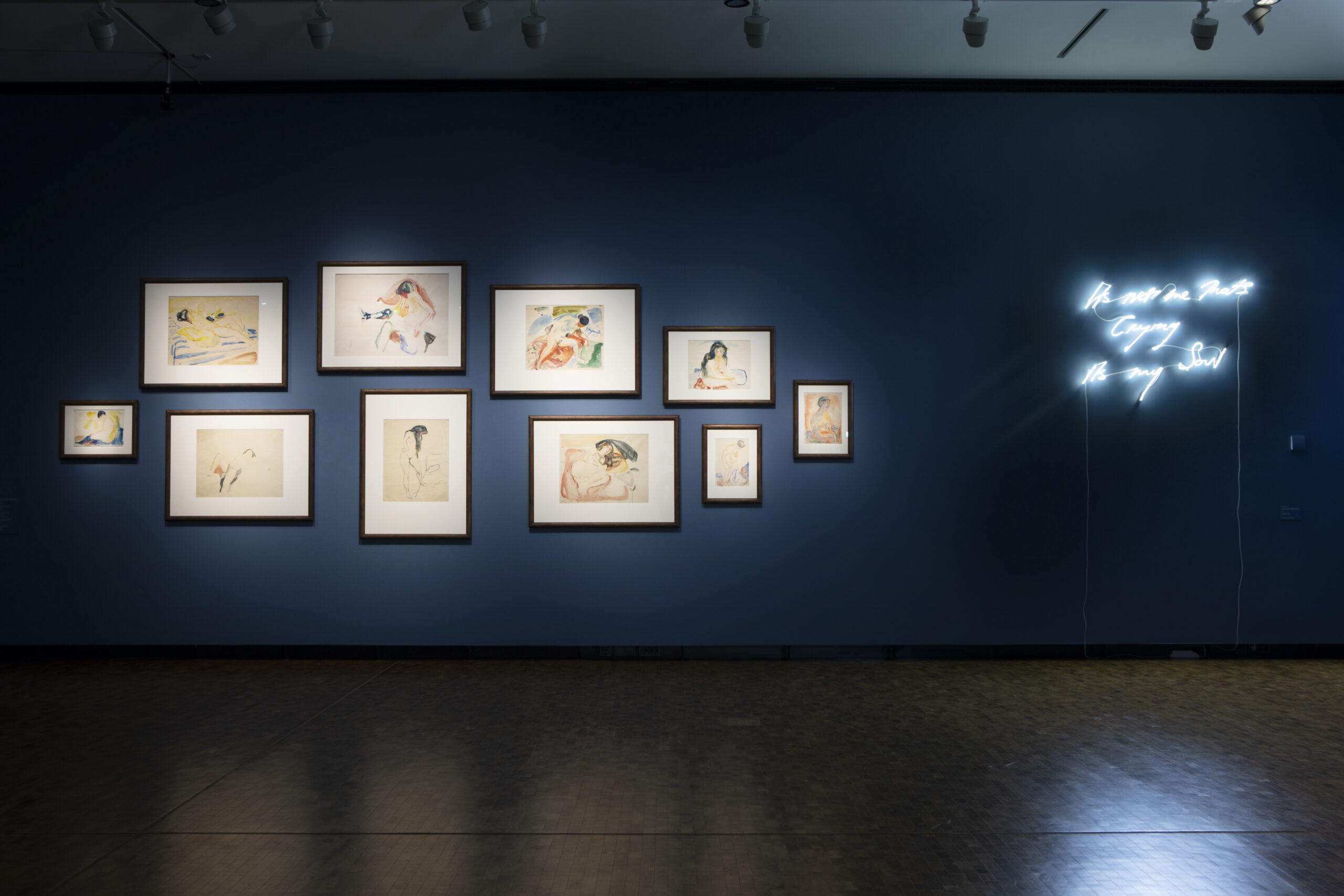
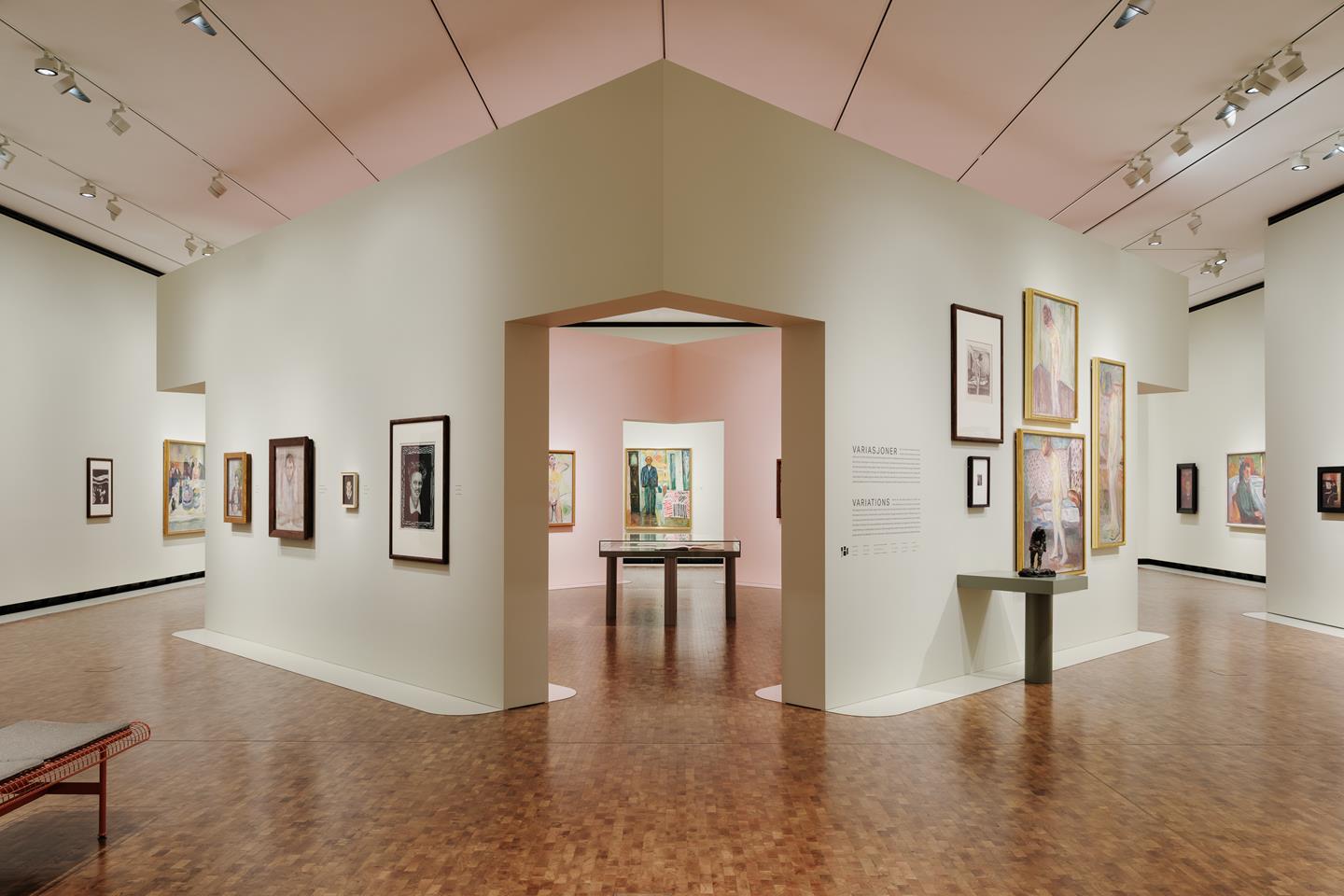
All the exhibition spaces at the Munch Museum are devoid of natural daylight. The building is a vertical museum where visitors ascend via escalators, moving from areas filled with daylight into enclosed spaces illuminated by artificial light. Zenisk sought to design the lighting in the exhibition halls so that the public would not focus on the space itself, but rather experience it as naturally lit, with intuitive wayfinding. The artworks needed to appear naturally illuminated, without any visibly emphasized spotlights—and, of course, free from reflections and glare. It was essential to bring out the pure colors in Munch’s paintings, drawings, and prints; consequently, great emphasis was placed on light quality, color rendering, light distribution, and lighting angles. As much of Munch’s art is fragile and highly sensitive to light exposure, the quality and natural color rendering—even at low light levels—had to be perfect, right down to 25 lux. Which is the light level the most famous versions of The Scream are illuminated at. The rest of the exhibition is lit in such a way that this masterpiece does not appear dim by comparison.
LIGHT:
Beyond simply allowing the viewer to see the art fully, curation involves its own narratives that are deliberately supported by lighting. The lighting should go unnoticed while enhancing the specific curatorial approach. Color rendering and light quality (soft vs. hard) are essential to the experience, as are the perception of the space and its layout, and the distribution and balance of the light. This is where our profession adds value to the experience; the effect is often subtle, yet significant.
Custom design for The Scream experience
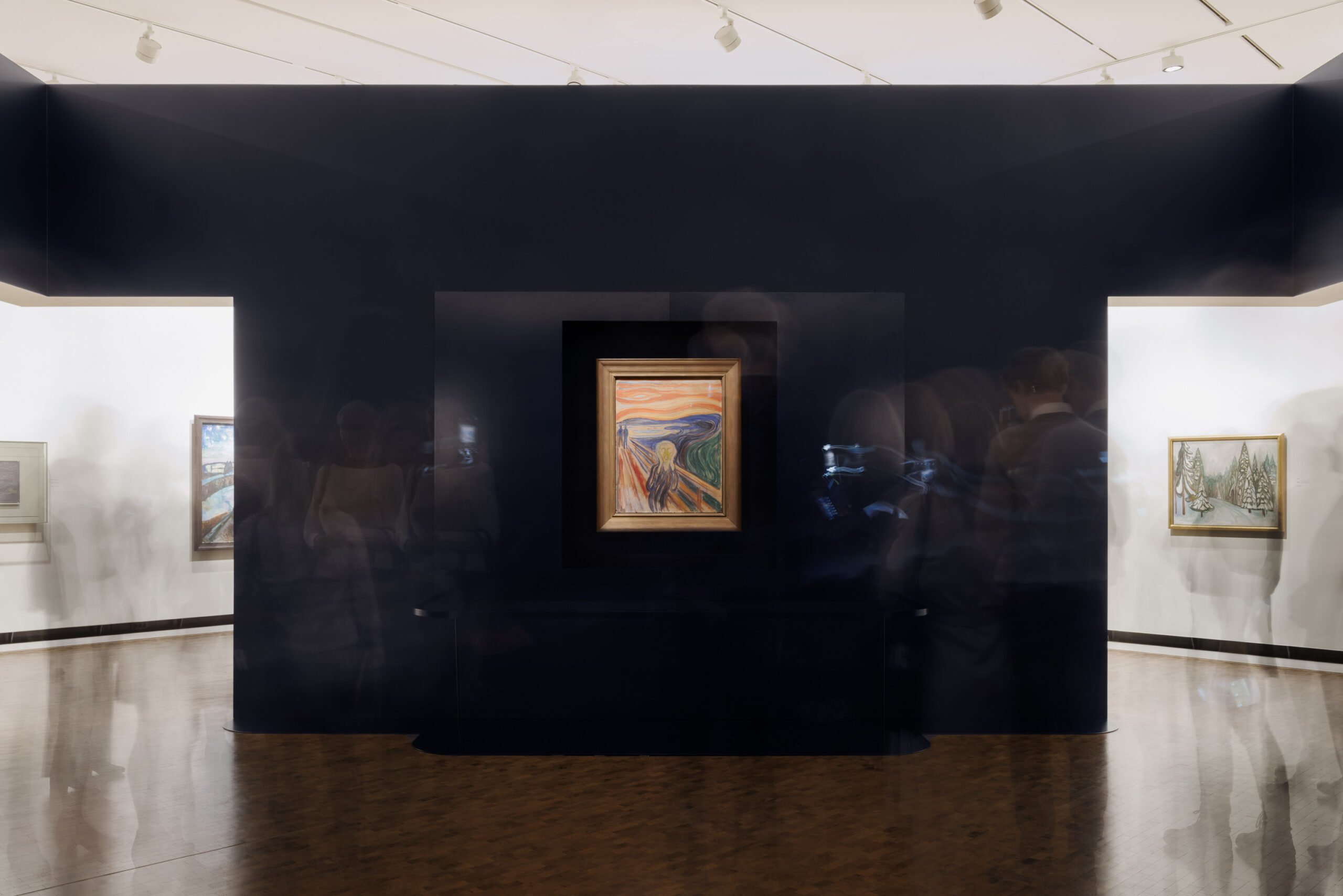
In the dedicated room where four versions of Munch’s famous The Scream are displayed, the lighting precisely frames each work. The versions of “The Scream” are highly fragile and are displayed at an illuminance of only 25 lux for a few hours each day. To ensure a positive visitor experience, the three versions are housed in cabinets that open in rotation during the day. The room is kept completely dark, with the cabinets painted black. The artworks are illuminated using precise framing lights, creating the impression that the art is emerging from the darkness. The cabinets for the various versions of The Scream are constructed as solid steel units featuring automatic door opening and closing mechanisms. The museum imposed strict requirements: the door operation had to be virtually silent, and the mechanism had to generate no vibrations within the cabinet. Zenisk therefore chose to use high-quality linear guides and motors. The rails and guide carriages are engineered with extreme precision—the same technology used in industrial robots capable of performing thousands of repetitive cycles without requiring maintenance or servicing. The carriages are driven by a timing belt connected to a stepper motor—a brushless DC electric motor that divides a full rotation into a series of equal steps. The motor’s position can be commanded to move to and hold at one of these steps without a position feedback sensor. In this way, the doors open and close with controlled acceleration, deceleration, and a specific speed, following a control pulse from the lighting controller, which also dims the lights up and down in coordination with the opening and closing of the doors.
OM:
Alle utstillingsrommene på Munchmuseet er uten dagslys. Bygget er et vertikalt museum hvor de besøkende reiser opp rulletrappene. De går inn i utstillingsrom fra dagslyssituasjon til en lukket kontekst med kunstig lys.
Zenisk ønsket å designe lyset i utstillingshallene på en slik måte at publikum ikke tenker på selve rommet, men heller opplever det som naturlig opplyst med intuitiv orientering.
Kunstverkene skal fremstå naturlig opplyst uten synlig fremhevet fokus. Og selvfølgelig uten refleksjoner og gjenskinn. Det var essensielt å få frem de rene fargene i Munchs malerier, tegninger og trykk. Derfor ble det lagt stor vekt på lyskvalitet, fargegjengivelse, lysfordeling og lysvinkel.
Siden mye av Munchs kunst er skjør og svært følsom for lyseksponering, måtte kvalitet og den naturlige fargegjengivelsen med dempet lys være perfekt helt ned til 25 lux. Dette er nivået de mest kjente versjonene av SKRIK er belyst med. Resten av utstillingen er belyst på en slik måte at dette hovedverket ikke fremstår svakt i sammenligning.
LYS:
Foruten å la betrakteren se kunsten fullt ut, har også kuratering egne narrativ som bevisst støttes av lys. Belysningen skal ikke merkes, men løfte fram i den gitte kurateringen.
Fargegjengivelse og lyskvalitet (myk/hard) er essensielt for opplevelsen. Dernest hvordan du oppfatter rommet og organisering. Så hvordan lyset fordeles og balanseres. Det er der profesjonen vår kan gi merverdi til opplevelsen. Det er ofte subtilt, men betyr mye.
Spesialdesign for opplevelsen av SKRIK
I det spesielle rommet hvor 4 utgaver av Munchs berømte “Skrik” er utstilt i lys som presist rammer inn verket.
“Skrik” utgavene er svært skjøre verk som kun vises med 25 lux noen få timer hver dag. For å sikre de besøkende en god opplevelse, er de tre versjonene montert i skap som er vekselvis åpne på dagtid. Rommet er helt mørkt med kabinett malt svart. Verkene er belyst med nøyaktig tilpasset innramming. Dette gir en følelse av at kunstverket kommer ut av mørket.
Kabinettene til de ulike utgavene av Skrik er laget som hele stålskap med automatisk åpning og lukking av dører.
Det var satt strenge krav fra museet om at driften på dørene skulle være tilnærmet lydløs og at det ikke skaptes noen vibrasjoner i kabinettet Zenisk valgte derfor å bruke lineære føringer og motorer av høy kvalitet. Skinnene og føringsvognene er designet med svært høy presisjon og brukes i automatiske industriroboter der det utføres mange tusen repetisjoner uten at det kreves ettersyn eller service Vognene drives av en tannremmer koblet til en stepmotor, som er en børsteløs DC elektrisk motor som deler en full rotasjon i et antall like trinn. Motorens posisjon kan beordres til å bevege seg og holde i ett av disse trinnene uten noen posisjonssensor for tilbakemelding. På denne måten åpnes og lukkes dørene med kontrollert akselerasjon, retardasjon og bestemt hastighet etter en styringspuls fra lyskontrolleren som også dimmer lyset opp og ned koordinert med åpning og lukking av dørene.
Client:
Munchmuseet
Photo:
Ivar Kvaal, Einar Aslaksen, Tomasz Majewski
ARK:
Manthey Kula
| Cookie | Duration | Description |
|---|---|---|
| cookielawinfo-checkbox-analytics | 11 months | This cookie is set by GDPR Cookie Consent plugin. The cookie is used to store the user consent for the cookies in the category "Analytics". |
| cookielawinfo-checkbox-functional | 11 months | The cookie is set by GDPR cookie consent to record the user consent for the cookies in the category "Functional". |
| cookielawinfo-checkbox-necessary | 11 months | This cookie is set by GDPR Cookie Consent plugin. The cookies is used to store the user consent for the cookies in the category "Necessary". |
| cookielawinfo-checkbox-others | 11 months | This cookie is set by GDPR Cookie Consent plugin. The cookie is used to store the user consent for the cookies in the category "Other. |
| cookielawinfo-checkbox-performance | 11 months | This cookie is set by GDPR Cookie Consent plugin. The cookie is used to store the user consent for the cookies in the category "Performance". |
| viewed_cookie_policy | 11 months | The cookie is set by the GDPR Cookie Consent plugin and is used to store whether or not user has consented to the use of cookies. It does not store any personal data. |